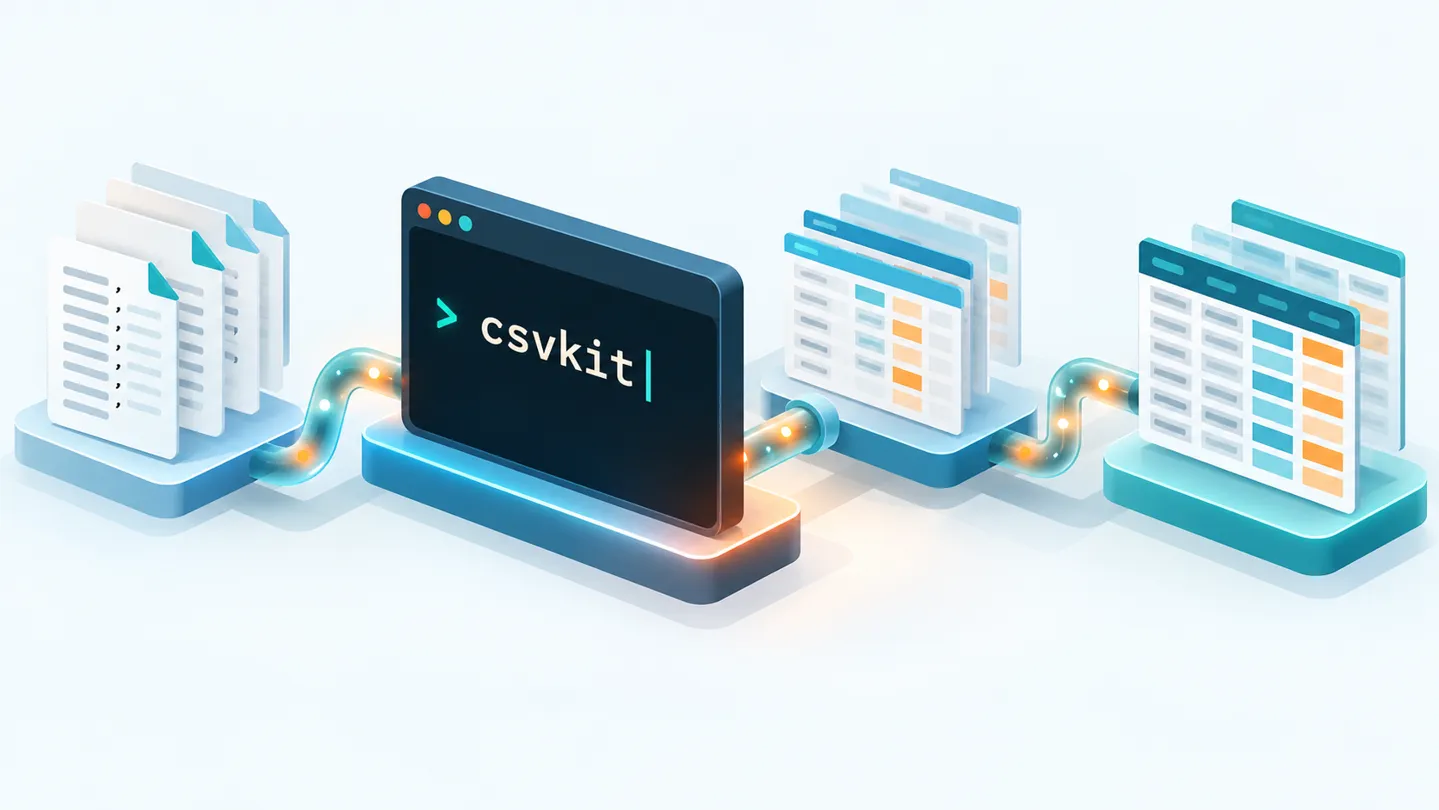
A CSV file arrives. Before loading it into a database, you want to see its columns, check for missing values, and find the records you need. Opening a spreadsheet works, but becomes inconvenient when you have to repeat the same operation across several files. Writing a program for every check is not always worthwhile either.
csvkit brings together command line tools for converting and processing tabular data. It is written in Python and handles many of these tasks with short commands you can save and run again.

Python remains one of the most comfortable languages for exploring and transforming data. But DataFrame convenience does not always translate into speed: as rows and columns grow, memory and CPU costs become obvious. Polars addresses that problem with a Rust-based DataFrame library exposed through a Python API.
What is Polars?
Polars is an analytical query engine and DataFrame library for tabular data. Its core is written in Rust, uses an Apache Arrow-compatible memory model, and combines vectorized, columnar processing with query optimization.

Some tools appear in data pipelines because a large company imposes them. Others spread because they solve an everyday problem with an elegance that is hard to ignore. DuckDB belongs to the second category. It is a small, fast, embeddable analytical database that can query local or remote files with SQL. In recent years it has become a common part of Data Engineering, Data Science, and Analytics Engineering workflows.
