Importing a library can involve reading files, executing initialization code, and loading further dependencies. We pay that cost even when we only want to display a tool’s help message. Python 3.15 introduces Explicit Lazy Imports, defined in PEP 810 and covered in What’s New in Python 3.15: we can declare an import and defer loading until first use.

AI-generated conceptual cover. It evokes a document collection and its summaries; it does not represent the method’s architecture or experimental results.
Lately, I had been wondering how much code was being generated with AI worldwide and how many programmers still wrote everything by hand. Investigating those questions would mean looking in many places: surveys, studies of GitHub repositories, Stack Overflow posts, and company reports. Each source might contribute part of the story, but we would need to check what it actually measures and which conclusions we can draw from it.
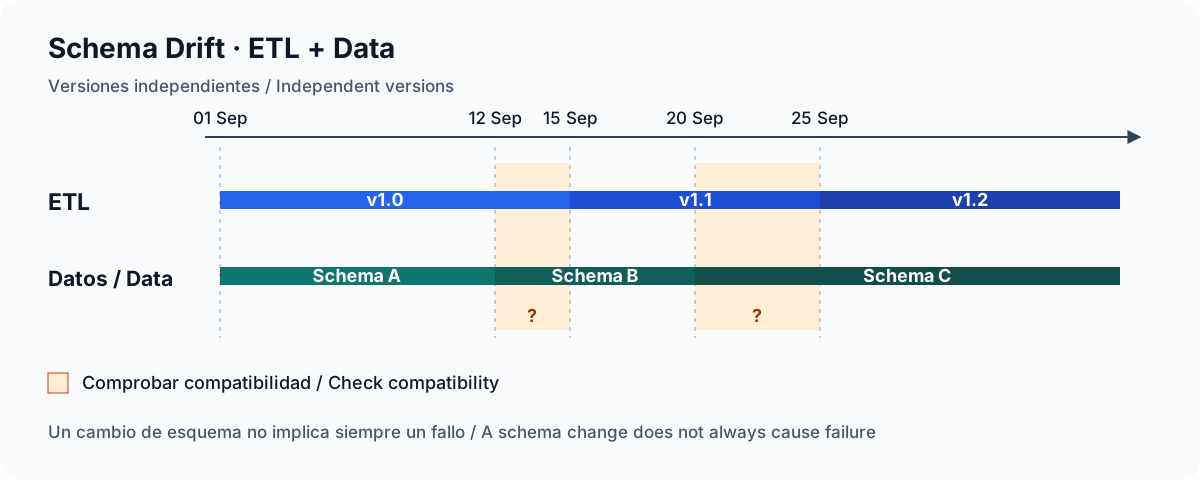
Every morning, an ETL receives a CSV, converts ages to integers, and loads customers. Yesterday it worked with this file:
id,name,age
1,John,25
2,Mary,30
Today, the provider adds a country:
id,name,age,country
1,John,25,USA
2,Mary,30,UK
A few days later, another surprise arrives:
id,name,age,country
1,John,25,USA
2,Mary,unknown,UK
An additional column may be harmless if we select fields by name and allow extra columns. If we unpack each row into three variables, it may break the load. unknown may cause an age conversion error, silently become null, or lead a subsequent inference to treat the entire column as text.

Illustrative reconstruction generated with AI. Lower Don–Volga region, around 3000 BCE. Herding, dairy products and wagon transport have archaeological and biomolecular support; the camp, garments and faces are illustrative choices rather than an exact reconstruction. References: Wilkin et al., 2021 and the 2022 study of dairying in the Caucasus and Eurasian steppes.
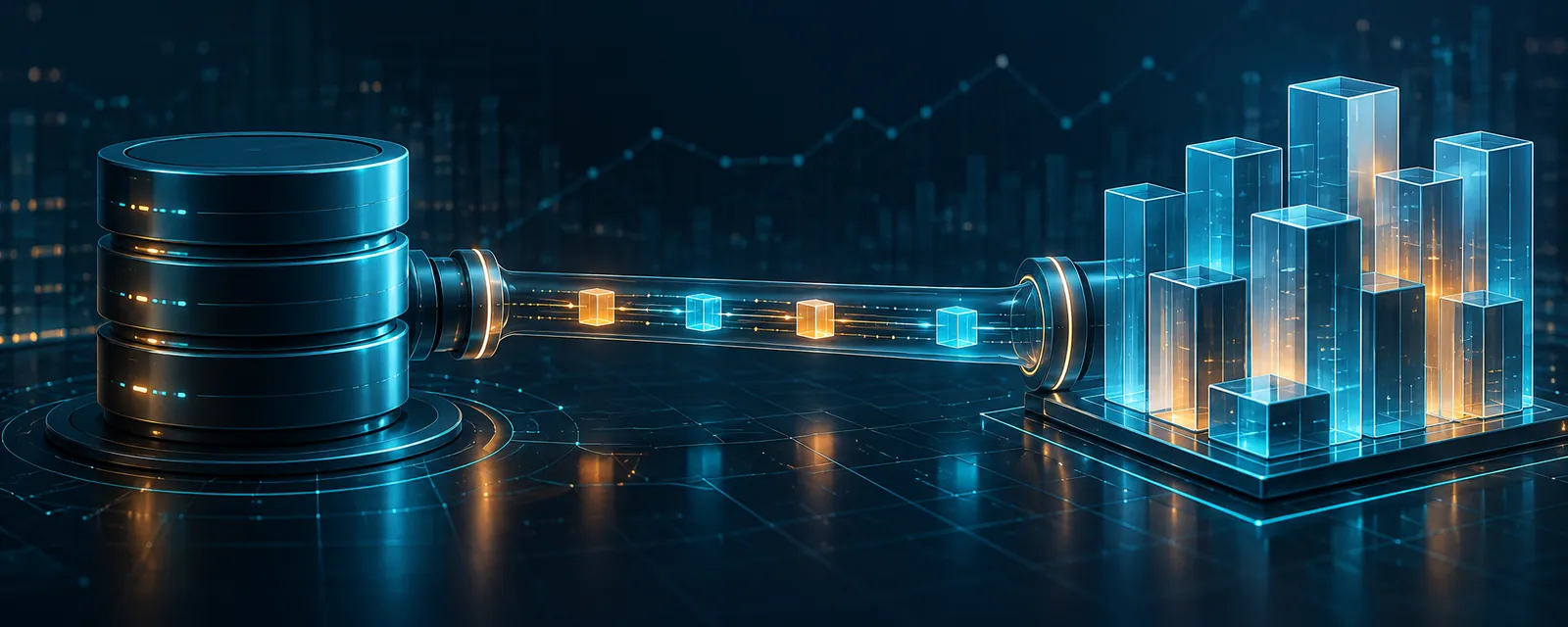
Imagine a shop with ten million orders in its database. The analytics team needs to query today’s sales, so it copies those orders into an analytical warehouse every night. If only ten thousand changed today, transferring all ten million again is slow and expensive. Change Data Capture (CDC) identifies the changes so the pipeline can send only what is needed.
